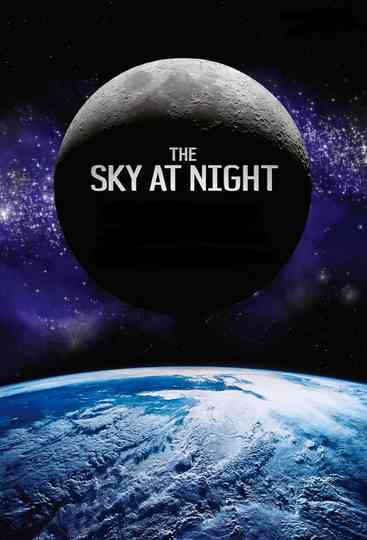
1989 Episodes
1. Mysteries of the Winter Sky
The winter sky is magnificent, with Orion dominant; this year there are also two of the brilliant planets, Jupiter and Mars. But there are puzzles to solve, too. For example, why was Sirius once described as a red star rather than a white one - and has Alcor, the companion to Mizar in the Great Bear, brightened since ancient times? Patrick Moore takes a look round the winner sky, and discusses some of these curious mysteries.
2. Icebergs and Crouching Giants
How many star systems or galaxies are there? It now seems that there are many more than has been believed - some of them so dim that they are barely visible, so that we are seeing only 'the tip of the iceberg'; others so compact, like crouching giants, that they have been mistaken for stars. Professor Michael Disney of Cardiff University, who has been deeply involved in this new research, joins Patrick Moore to give the latest results.
3. Cosmic Lighthouse
Pulsars are among the most bizarre objects in the universe. They are very small, amazingly dense and spinning round rapidly. Astronomers have been waiting to see whether the supernova in the Large Magellanic Cloud, seen in 1987, will produce a pulsar. Reports from the Cerro Tololo Observatory in Chile indicate that this may well be the case, as Dr Paul Murdin discusses with Patrick Moore.
4. Observing from La Silla
High in the Andes mountains of Chile lies one of the world's major observatories, La Silla, with its 15 telescopes. Conditions there are ideal - far better than anywhere in Europe. In this programme Patrick Moore visits La Silla , talks to the astronomers there, and even has what may be his last view of Halley's Comet.
5. Exploring the Ultraviolet Sky
The IUE or International Ultraviolet Explorer satellite was launched in 1978. It had an estimated lifespan of three years, but it is still operating and has revolutionised our whole understanding of the stars. In this month's Sky at Night, Patrick Moore is joined by Professor Robert Wilson , who has been the prime mover in the IUE experiment.
6. Telescopes for the 90s
New generation astronomical telescopes are entirely different from those of the past. They have different types of mountings; their main mirrors are made in a new way, and in some cases there are separate telescopes working in combination. Dr Ron Maddison talks about this new revolution in telescope making.
7. The Curious Little World of Pluto
Pluto is the smallest of the planets, and also one of the most puzzling. It is so far from the sun that it takes almost 248 years to complete one orbit; it is made up of a mixture of rock and ice; it has an extensive though thin atmosphere; and it is attended by a companion. This autumn Pluto reaches its closest point to the sun, and Patrick Moore takes the opportunity to sum up what is known about this curious little world.
8. Eclipse of the Moon
The eclipse of the Moon, due on the early morning of 17 August, will be well seen from all over Britain (clouds permitting). It is a fascinating spectacle; slowly the Earth's shadow creeps across the Moon's face, blotting out the mountains and craters. Patrick Moore talks about the eclipse, and H. J. P. Arnold explains how to take good photographs of it with an ordinary camera.
9. Observing from the Atacama
The Atacama Desert of Chile is an exceptionally good site for astronomers; three major observatories have been set up there. One (La Silla) was the subject of a Sky at Night programme earlier this year. Patrick Moore visits the other two, Cerro Tololo and Las Campanas, and talks to the astronomers working there.
10. Neptune - Voyager's Last Planet
Voyager 2, launched in 1977, has already passed by the giant planets Jupiter, Saturn and Uranus, all of which have provided plenty of surprises. Voyager has now passed Neptune, sending back remarkable new information about the outermost planet. In this programme, Patrick Moore is joined by Dr Garry Hunt and other experts from the American team to summarise what has been discovered about this lonely, remote world.
11. The Making of an Astronomer
Do you want to become a professional astronomer? If so, you will need a proper qualification. One of the leading courses for would-be professional astronomers is at Birmingham University. Patrick Moore goes there to be joined by Professor Peter Willmore , Dr Ken Elliott and, of course, the students.
12. The Bull in the Sky
Patrick Moore talks about Taurus the Bull, one of the most interesting objects in the winter night sky. It contains one brilliant star, two beautiful star clusters (one of which, the Pleiades or Seven Sisters, is familiar to many people), and much else
13. Voyager's Grand Tour
In 1977 Voyager 2, the most ambitious of all space-craft, was launched toward the outer planets. Since then it has surveyed Jupiter, Saturn, Uranus and Neptune in turn, and has sent back amazing pictures as well as a vast amount of new information. Patrick Moore sums up what Voyager has told us, and goes on a grand tour of the outer solar system.