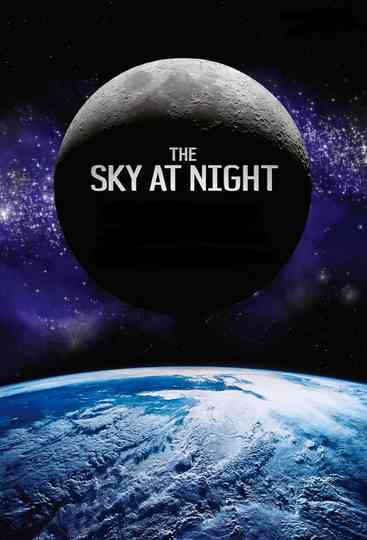
1971 Episodes
1. The Approach of Mars
Mars has now started to approach the Earth. Later in 1971 it will be as close to us as it can ever come. More Mariner spacecraft will be sent there, and Patrick Moore looks ahead to see what new information they are likely to bring us from this puzzling world.
2. Things are Seldom What They Seem
Our view of the Universe is always out of date! We see the Moon as it was over a second ago, the Sun 81 minutes ago, and remote star systems as they used to be before the Earth was formed. Patrick Moore explains why we can never see the universe 'now.'
3. Sirius, the Dog-Star
Patrick Moore and Dr Vinicio Barocas discuss this star and its strange companion, a body so dense that one thimbleful of its material would weigh a ton.
4. A Black Hole in Space?
Patrick Moore discusses with Professor Samuel Tolansky a startling new theory about an 'invisible' star in the two-star system Epsilon Aurigae. Could this mysterious object be, not an ordinary star at all, but a 'collapsar' or collapsed star within a black hole moving through the galaxy?
5. Jupiter - the Other Magnetic Planet
Only two planets are known to have magnetic fields: the Earth itself, and Jupiter the huge cold outer planet full of mysteries which have puzzled astronomers for centuries. Patrick Moore discusses with Dr Raymond Hide the significance of Jupiter's radio signals, and what we may learn from the probes which will fly past it in a few years' time.
6. Orbiting Space-Stations
The Russian Soyuz flights and America's planned launching of a manned Skylab in 1973 are steps towards the establishment by the 1980s of permanent observatories outside earth's atmosphere. As well as making observations of the sun, a purpose of the first Skylab is to solve the problem of enabling crews to work efficiently during long periods of weightlessness. Patrick Moore discusses this problem With Wing Cmdr. Tony Nicholson and explains how such observatories will help astronomers to see further into outer space.
7. Tracking the Stars
A telescope must be moved continuously to follow the stars. Patrick Moore uses his own telescopes to show how this is achieved, and visits the observatories of Henry Brinton and Cmdr Henry Hatfield, RN.
8. How Far Are the Stars?
The nearest star - not counting our own sun, which is a star - is 25 million million miles from us. Patrick Moore uses a school cricket-pitch to show how the distances of the stars have been worked out: and he explains that, because the light of stars travels so far to reach us, we see many of them not as they are now but as they were centuries ago.
9. Mars Comes Close
Mars is at its closest to earth since 1956, and American and Russian probes are on their way to map it and send back scientific information. Patrick Moore discusses with Dr Geoffrey Eglinton the ambitious Viking mission, now in preparation to soft-land a space craft on the red planet in 1975. The mission which may at last answer the question: Is there life on Mars?
10. The Life and Death of a Star
Stars look like simple points of light to the naked eye, but they have complicated lives, evolving from dust and gas and eventually ageing into dense 'white dwarfs.' Patrick Moore discusses the stages of a star's life with Iain Nicolson, who is a lecturer on astronomy at Hatfield Polytechnic.
11. Kepler, Genius and Mystic
The mathematician and astronomer Johann Kepler was born in 1571. Tonight Patrick Moore discusses with Colin Ronan the importance of Kepler's discoveries.
12. Mars
Three spacecraft should reach the red planet this month, the Russian Mars 2 and Mars 3 and the American Mariner 9. Patrick Moore shows the latest photographs from Mariner, and discusses these with Arthur Cross
13. The Royal Observatory Telescope
A historic telescope recently returned from Herstmonceux to its original home on the roof of the old Royal Observatory, Greenwich. Patrick Moore talked to the Astronomer Royal, Sir Richard Woolley, about the telescope's history, and to Cmdr Derek Howse, RN, about its future.